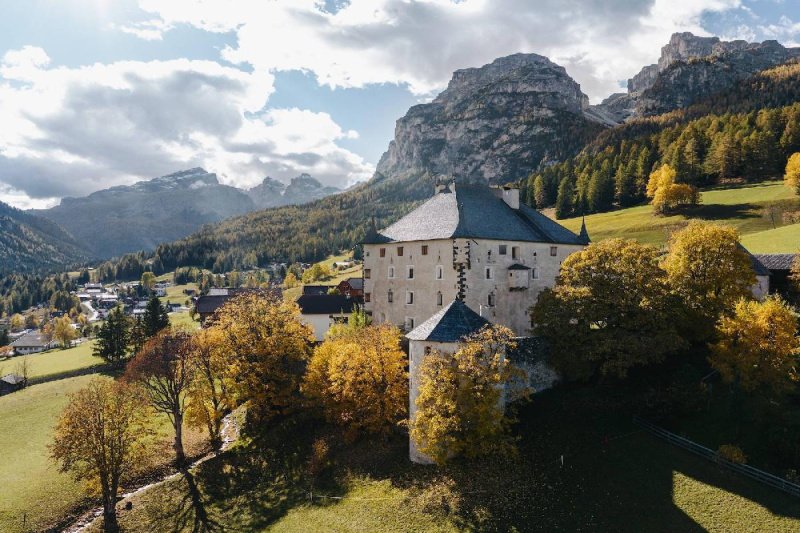
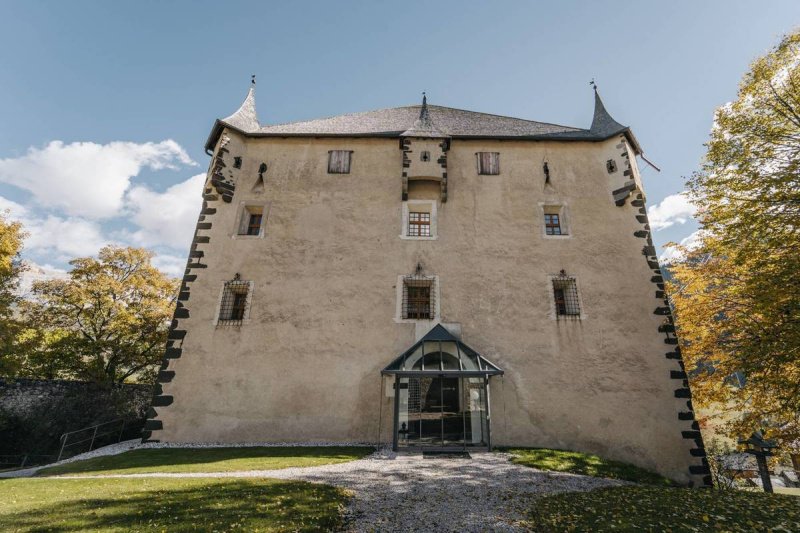
In the heart of Alta Badia, perched on a rocky dolomitic outcrop, stands Castel Colz - a 16th-century architectural gem and a rare example of noble Gothic-Renaissance residence in the Italian Dolomites.
Commissioned in 1536 by Hans von Rubatsch with the approval of Emperor Ferdinand I, the castle was completed in just twelve months and later passed to the Colz family, from whom it takes its name. It's imposing yet harmonious structure, punctuated by towers and compact volumes, blends seamlessly into the surrounding Dolomite landscape.
The interiors preserve the original charm of the castle, with vaulted ceilings, antique wood paneling, period furnishings and decorative details that echo the noble Alpine tradition. Each room tells a story, offering a refined balance between historical authenticity and timeless hospitality.
Known in the local Ladin language as Gran Ciasa, the castle has long been a cultural and symbolic landmark of the valley - a place steeped in history, elegance and natural beauty. Today, thanks to a careful conservative restoration, the property offers a rare opportunity for those wishing to inhabit or enhance a truly unique architectural heritage, immersed in the authenticity of the UNESCO-listed Dolomites.
自动翻译所用的语言
Nel cuore dell'Alta Badia, arroccato su uno sperone di roccia dolomitica, si erge Castel Colz: un gioiello architettonico del XVI secolo, raro esempio di residenza signorile in stile gotico-rinascimentale.
Voluto nel 1536 da Hans von Rubatsch con il permesso dell'imperatore Ferdinando I, fu completato in soli dodici mesi e successivamente appartenne alla famiglia Colz, da cui prende il nome. La struttura, imponente e armoniosa, è scandita da torri e volumi compatti che si integrano perfettamente con il paesaggio dolomitico circostante.
Gli interni conservano il fascino originario del castello, con ambienti voltati, boiserie in legno antico, arredi d'epoca e dettagli decorativi che richiamano la tradizione nobiliare dolomitica. Ogni sala racconta una storia, in un equilibrio raffinato tra autenticità storica e accoglienza senza tempo.
Conosciuto in ladino come Gran Ciasa, il castello è da sempre simbolo identitario della valle: un luogo ricco di storia, cultura e bellezza. Oggi, grazie a un accurato restauro conservativo, la proprietà rappresenta un'opportunità straordinaria per chi desidera abitare o valorizzare un bene unico, immerso nell'autenticità delle Dolomiti, Patrimonio UNESCO.
Im Herzen von Alta Badia, auf einem Felsvorsprung aus Dolomitgestein gelegen, erhebt sich Schloss Colz - ein architektonisches Juwel aus dem 16. Jahrhundert und ein seltenes Beispiel für einen adeligen Wohnsitz im gotisch-renaissancistischen Stil in den Dolomiten.
Errichtet im Jahr 1536 von Hans von Rubatsch mit der Genehmigung von Kaiser Ferdinand I., wurde das Schloss in nur zwölf Monaten vollendet und ging später in den Besitz der Familie Colz über, von der es seinen Namen trägt. Die imposante und zugleich harmonische Struktur, geprägt von Türmen und kompakten Baukörpern, fügt sich nahtlos in die umliegende Landschaft der Dolomiten ein.
Die Innenräume bewahren den ursprünglichen Charme des Schlosses: mit Gewölbedecken, antiken Holzvertäfelungen, historischen Möbeln und dekorativen Details, die an die adelige Wohnkultur der Dolomiten erinnern. Jeder Raum erzählt eine Geschichte - in einem stilvollen Gleichgewicht zwischen historischer Authentizität und zeitloser Gastlichkeit.
Im lokalen Ladinisch als Gran Ciasa bekannt, ist das Schloss seit jeher ein kulturelles und identitätsstiftendes Wahrzeichen des Tals - ein Ort voller Geschichte, Eleganz und natürlicher Schönheit. Heute, nach einer sorgfältigen konservativen Restaurierung, bietet die Liegenschaft eine außergewöhnliche Gelegenheit für all jene, die ein einzigartiges architektonisches Erbe bewohnen oder aufwerten möchten - eingebettet in die Authentizität der UNESCO-geschützten Dolomiten.
Au coeur de l'Alta Badia, perché sur un éperon rocheux dolomitique, se dresse le Castel Colz, un joyau architectural du XVI siècle et un rare exemple de résidence noble de style gothique-renaissance dans les Dolomites italiennes.
Commandé en 1536 par Hans von Rubatsch avec l'approbation de l'empereur Ferdinand I, le château fut achevé en seulement douze mois, avant de passer entre les mains de la famille Colz, dont il porte aujourd'hui le nom. Sa structure imposante mais harmonieuse, ponctuée de tours et de volumes compacts, s'intègre parfaitement au paysage dolomitique environnant.
Les intérieurs conservent tout le charme originel du château, avec des plafonds voûtés, des boiseries anciennes, un mobilier d'époque et des détails décoratifs qui évoquent la noble tradition alpine. Chaque pièce raconte une histoire, offrant un équilibre raffiné entre authenticité historique et hospitalité intemporelle.
Connu dans la langue ladine locale sous le nom de Gran Ciasa, le château constitue depuis longtemps un repère culturel et symbolique de la vallée, un lieu empreint d'histoire, d'élégance et de beauté naturelle. Aujourd'hui, grâce à une restauration conservatrice minutieuse, la propriété offre une occasion rare à ceux qui souhaitent habiter ou valoriser un patrimoine architectural véritablement unique, au cur de l'authenticité des Dolomites classées au patrimoine mondial de l'UNESCO.