Locality Pozzo Volito, Patù, Santa Maria di Leuca, Salento - Apulia
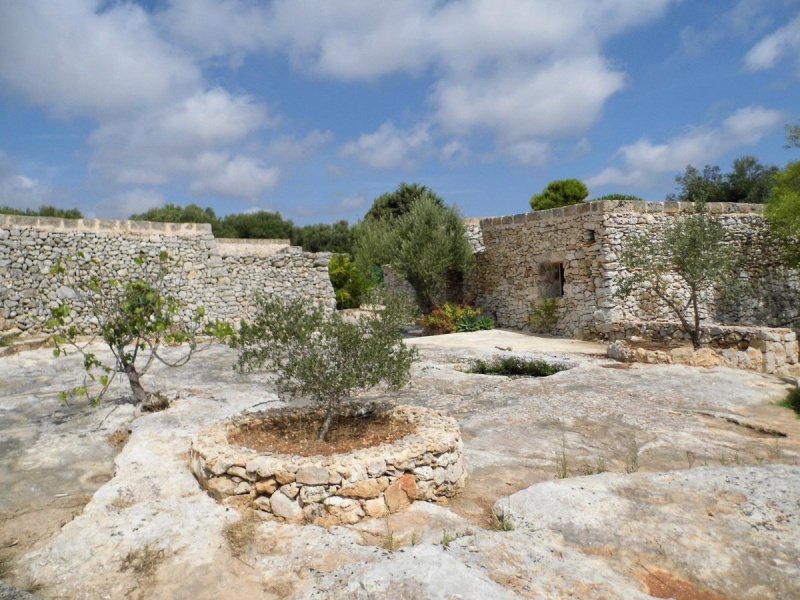
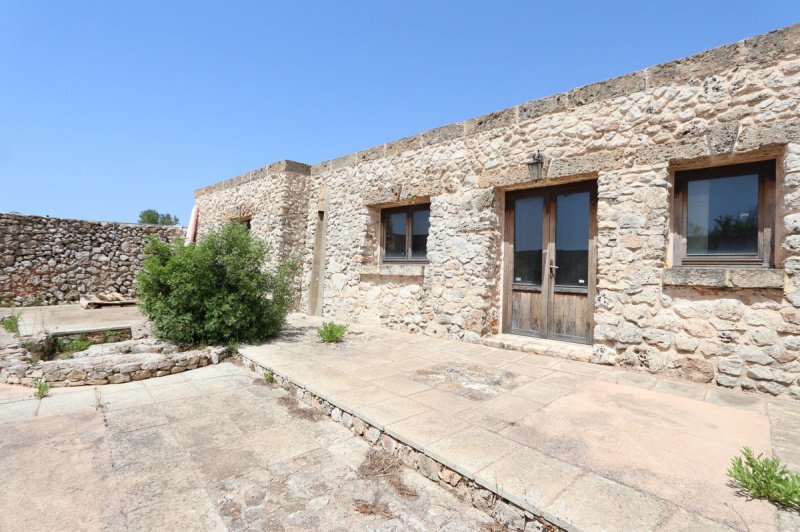
In an enchanting landscape typical of Salento, there is a small village dating back to the early 1800s. Its characteristic is the presence of ancient stone buildings, finely restored in every part. For this, the place retains all the charm of the past. The Acient village for sale consists of 6 Bedrooms, 3 Bathrooms, large Kitchen, various Pergolas and 2 wonderful internal Courts. Entirely covered by a rock pavement, smoothed by time and worked by man over the centuries. The surrounding land is characterized by centuries-old olive trees, some fig trees, prickly pears, almond trees, pomegranates and myrtles. In the center of one of the two courts, there is also an ancient cistern carved into the rock and dating back to the same period of construction of the village. In addition to the cistern, there is also a newly built artesian well, from which you can draw water in quantity. The entire property has an area between 10,000 and 20,000 square meters. You can decide to buy the Ancient Village of 200 covered square meters, with the land pertaining to 5,000 square meters . Or, to these, you can add adjacent lands for a maximum of 4 hectares.
Contact us and we will realize for you, turnkey, renovation and completion works according to your wishes... All this with D'AMICO IMMOBILIARE !
The Antico Borgo for sale is located in Patù, near Leuca
The town of Patù is 126 kilometers from the Airport of Salento (Brindisi). The small village is located at the extreme edge of Capo di Leuca, at the bottom of the hill of Vereto.
According to historians, the name Patù derives from the Greek pathos (suffering, pain). In fact, it would remember the suffering of the city of Vereto (Veretum), destroyed by the Saracens, from which the village was born. According to others, the name comes after Verduro Pato, keeper of the granaries of the lords of Vereto.
The civic coat of arms depicts a cat holding a fish between its teeth on a gold-coloured field. Although it is small, PATU' ha an important History. Among the most important historical sites, we mention the archaeological one with the remains of the Messapian city of Vereto, "the Centopietre" and the staircase and the Messapian port in the Bay of San Gregorio, marina di Patù, only 4 kilometers away from it.
Vereto is an ancient Messapian city located a short distance from the town. It is located on a small hill. The city was an important center for trade, both with Greece and with Magna Grecia. It became a Roman municipality and then was razed to the ground in the ninth century by the Saracens. Of this center, just some monumental testimonies remain, as the foundations of the walls that encircled the city and several burials.
In the Bay of San Gregorio, marina of Patù and distant from it only 4 kilometers, once, there was the port of the city of Vereto. On the spot, in fact, the remains of a staircase of Messapian origi and a well for the supply of fresh water are still visible.
The Centopietre is an ancient funerary monument, declared National Monument of second class in 1873. Dating back to the ninth century, it was built to bury the remains of the Geminian knight. Messenger of peace killed by the Saracens just before the final battle of June 24, 877, between Christians and Muslims. The rectangular structure is built with 100 blocks of limestone taken from the Messapian city of Vereto. Inside it has several overlapping layers of frescoes on sacred subjects dating back to the fourteenth century.
All Historians agree that the place where today is the Madonna di Vereto, was the center, both of the Vereto messapica, that of the Vereto Roman and medieval.
Patù overlooks the Ionian Sea for about 3 km with the resorts of Felloniche and Torre San Gregorio (seaside resort that houses various accommodation facilities). The entire municipal area is subject to landscape constraints for the natural composition characterized by Mediterranean scrub and local essences and for the presence of ancient monuments of inestimable aesthetic and traditional value as the pajare. Important is the presence of flora typical of the place as the Alisso di Leuca, thyme, myrtle and various species of wild orchids.
自动翻译所用的语言
Località Pozzo Volito, Patù, Santa Maria di Leuca, Salento - Puglia
In un incantevole paesaggio tipico del Salento, sorge un piccolo Borgo risalente agli inizi del 1800. La sua caratteristica è data dalla presenza di antiche costruzioni in pietra a secco, finemente ristrutturate in ogni parte. Per questo, il luogo conserva tutto il fascino di una volta. L'Antico Borgo in vendita è composto da 6 Camere da letto, 3 Bagni, Cucina grande, Pergolati vari e 2 Corti interne meravigliose. Interamente ricoperte da una pavimentazione di roccia, levigata dal tempo e lavorata dall’uomo nei secoli. Il terreno circostante è caratterizzato da alberi di ulivo secolari, alcuni alberi di fichi, fichi d’india, mandorli, melograni e mirti. Inoltre al centro di una delle due corti, c'è un'antica cisterna scavata nella roccia e risalente allo stesso periodo di costruzione del Borgo. Oltre alla cisterna, c'è anche un pozzo artesiano di recente realizzazione, dalla quale si può attingere acqua in quantità. L'intera proprietà ha una superficie tra 10.000 e 20.000 metri quadri. Si può decidere di acquistare l'Antico Borgo di 200 metri quadri coperti, con il terreno di pertinenza di 5.000 metri quadri . Oppure, a questi, si possono aggiungere i terreni adiacenti per un massimo di 4 ettari.
Contattaci e realizzeremo per te, chiavi in mano, i lavori di ristrutturazione e completamento secondo i tuoi desideri… Tutto questo con D'AMICO IMMOBILIARE !
L'Antico Borgo in vendita si trova a Patù, vicino Leuca
Il comune di Patù dista 126 chilometri dall’Aeroporto del Salento (Brindisi). Il piccolo paese è situato all'estremo lembo del Capo di Leuca, ai piedi della collina di Vereto.
Secondo gli storici, il nome Patù deriverebbe dal greco pathos (patimento, dolore). Infatti, esso ricorderebbe le sofferenze della città di Vereto (Veretum), distrutta dai saraceni, dalla quale è poi nato il borgo. Secondo altri, il nome deriverebbe da Verduro Pato, custode dei granai dei signori di Vereto.
Lo stemma civico raffigura un gatto che stringe tra i denti un pesce su di un campo color oro. Pur essendo piccolo, PATU' è un Comune denso di storia. Tra i più importanti siti storici citiamo quello archeologico con i resti della città messapica di Vereto, “la Centopietre” e la scalinata e il porto messapico nella Baia di San Gregorio, marina di Patù, distante da esso solo 4 chilometri.
Vereto è un'antica città messapica situata a poca distanza dal centro abitato. Essa si trova su una piccola collina. La città fu un importante centro per il commercio, sia con la Grecia che con la Magna Grecia. Divenne municipio romano e poi fu rasa al suolo nel IX secolo ad opera dei Saraceni. Di tale centro rimangono alcune testimonianze monumentali come le fondamenta delle mura che cingevano la città e diverse sepolture.
Nella Baia di San Gregorio, marina di Patù e distante da esso solo 4 chilometri, un tempo vi era il porto della città di Vereto. Sul posto, infatti, sono ancora visibili i resti di una scalinata di origine messapica, un pozzo per il rifornimento di acqua fresca. I resti dell'approdo sono ancora visibili a pochi metri di profondità verso la punta dell'insenatura.
La Centopietre è un antico monumento funerario, dichiarato Monumento nazionale di seconda classe nel 1873. Databile al IX secolo, venne costruito per seppellire le spoglie del cavaliere Geminiano. Messaggero di pace ucciso dai saraceni subito prima della battaglia finale del 24 giugno 877, tra cristiani e islamici. La struttura, di forma rettangolare, è costruita con 100 blocchi di roccia calcarea provenienti dalla città messapica di Vereto. All'interno presenta diversi strati sovrapposti di affreschi a soggetto sacro risalenti al XIV secolo.
Tutti gli studiosi concordano sul fatto che il luogo dove oggi si trova la Madonna di Vereto, fosse il centro, sia della Vereto messapica, che quello della Vereto romana e medievale.
Patù si affaccia sul mare Ionio per circa 3 km con le località di Felloniche e Torre San Gregorio (centro balneare che ospita varie strutture ricettive). L'intero territorio comunale è sottoposto a vincolo paesaggistico per la composizione naturale caratterizzata da macchia mediterranea ed essenze locali e per la presenza di antichi monumenti dall'inestimabile valore estetico e tradizionale come le pajare. Importante è la presenza di flora tipica del luogo come l'Alisso di Leuca, il timo, il mirto e varie specie di orchidee selvatiche.